Inside the Mountain: The 10,000-Year Clock of the Long Now Foundation
The 10,000-Year Clock: A Monument Built for Deep Time
The Long Now Foundation’s 10,000-Year Clock is one of the most audacious pieces of modern horology: an immense, entirely mechanical clock being assembled inside a mountain, designed to keep accurate time for the next ten millennia. It is equal parts machine, monument, and message — a physical reminder that the future is real, and that the choices we make today echo far beyond our own lifetimes.
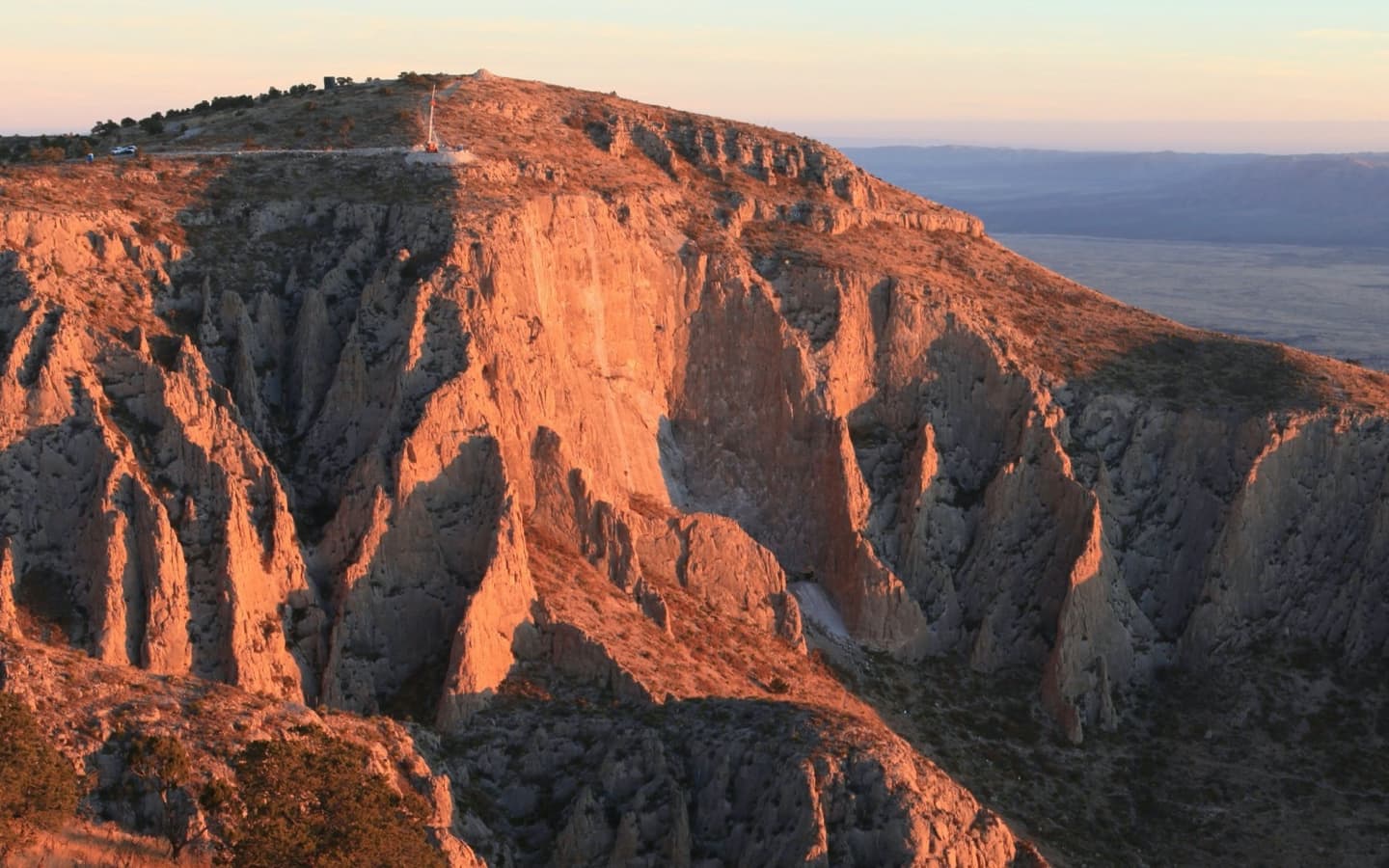
The first monument-scale 10,000-Year Clock is being assembled deep inside a mountain in West Texas.
Why build a clock that lasts 10,000 years?
Ten thousand years is roughly the age of modern civilization. The Clock intentionally stretches the human imagination to match that scale — suggesting that our future might be as long as our past, and inviting us to think like “good ancestors.” It’s meant to be an icon for long-term responsibility: not a prediction of what will happen, but a durable prompt to ask better questions about what should happen.
How does it work?
The Clock is designed around a few big ideas: longevity, maintainability, transparency, evolvability, and scalability. Mechanically, it’s built from long-lasting materials and engineered to run very slowly with minimal wear. To stay accurate over extremely long timescales, it synchronizes itself with the sun at solar noon. It also includes astronomical and calendar displays — and a chime system designed to create a different sequence each day for 10,000 years.
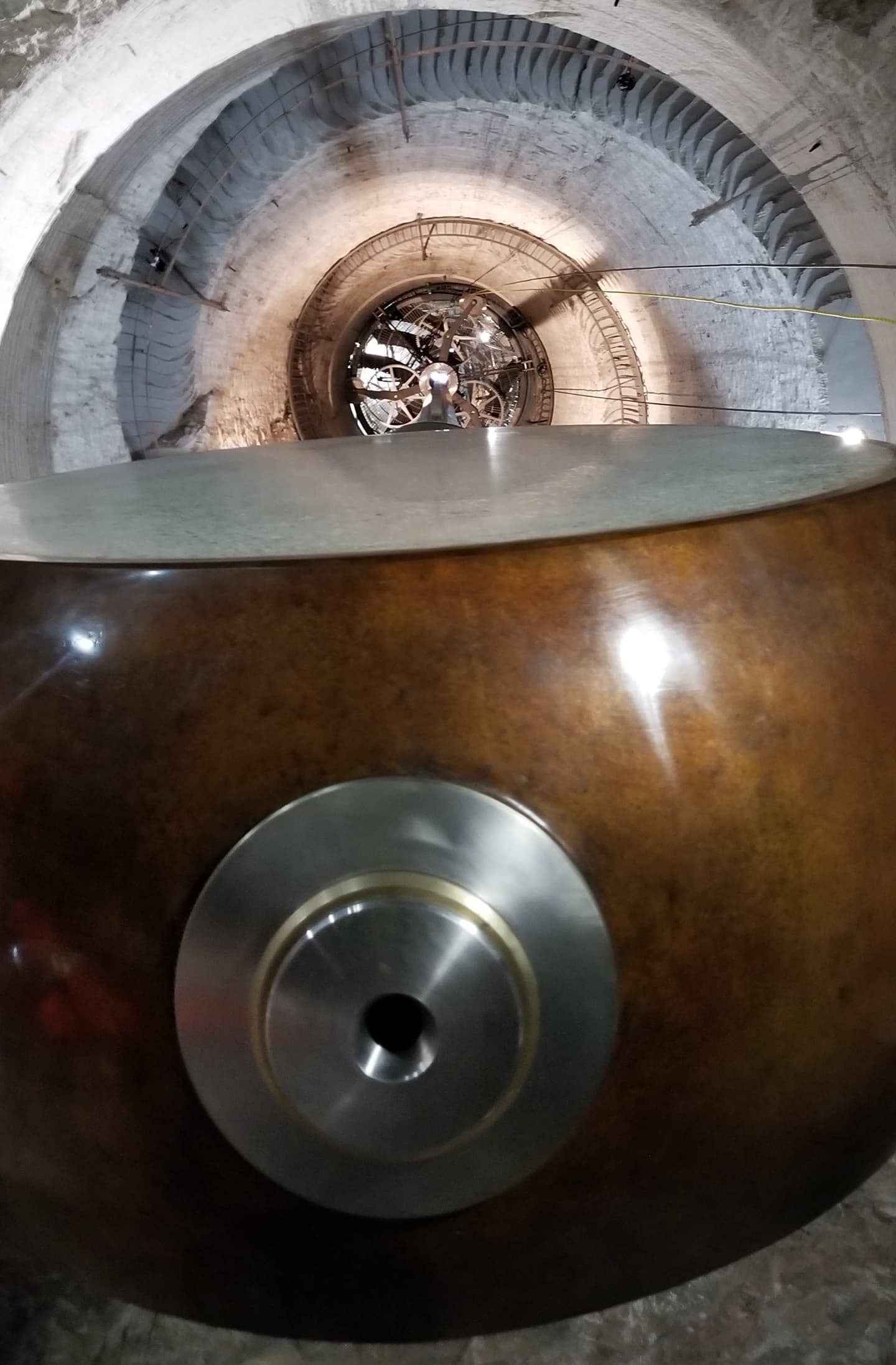
The Clock stores power in a massive drive weight deep inside the shaft.
The pilgrimage is part of the point
The Clock isn’t designed to be glanced at on a wall. A visit is intended to feel like a pilgrimage: entering the mountain, moving through dark tunnels, then climbing a spiraling stairway through a towering shaft of gears and mechanisms. The journey itself is meant to slow you down and widen your sense of time — until the Clock feels less like a gadget and more like a place.
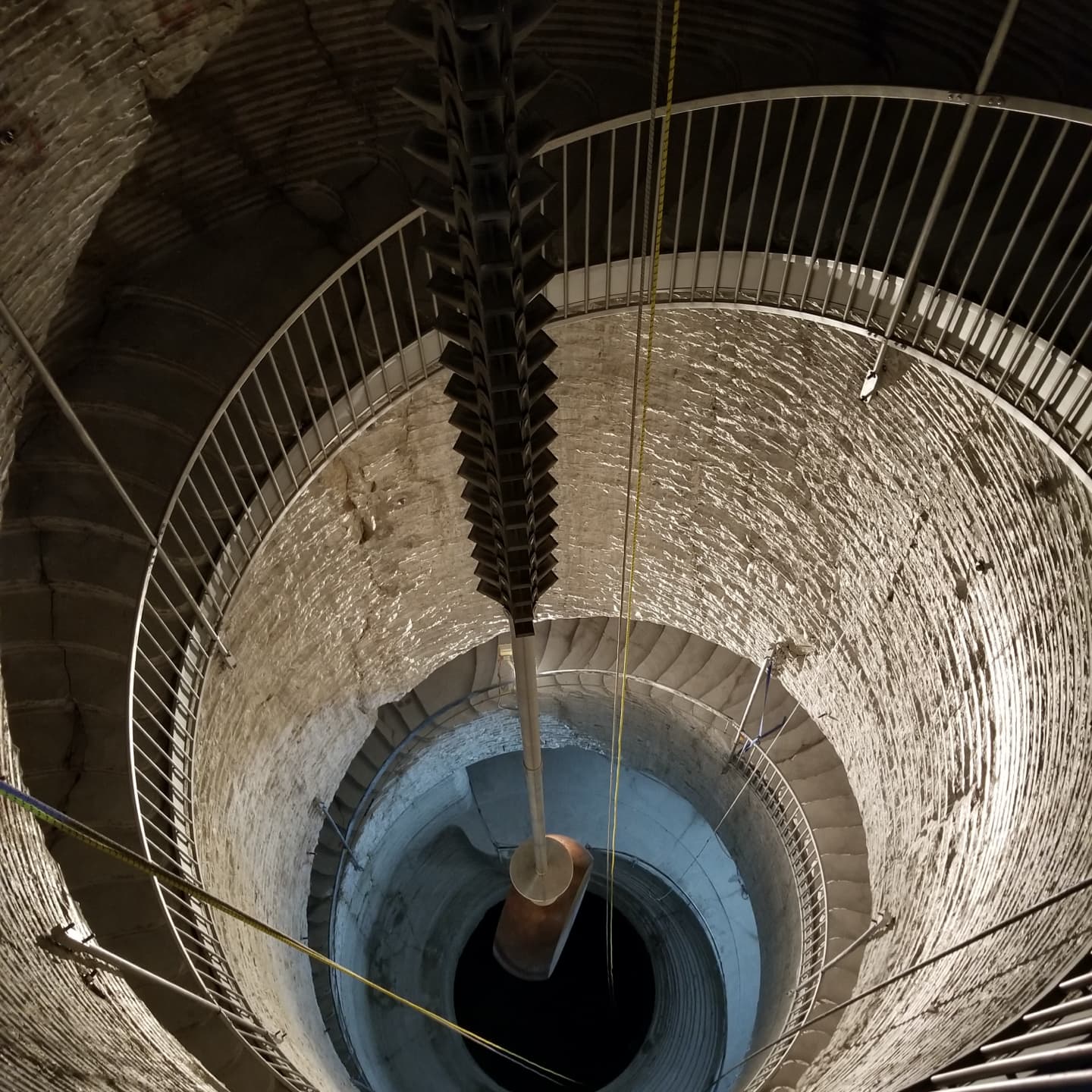
A spiral staircase wraps the Clock’s tall vertical shaft, carrying visitors past weights, gears, and the chime mechanisms.
Powered by nature, advanced by visitors
One of the Clock’s most poetic engineering choices is how it combines “wild” power and human attention. It harvests energy from environmental cycles and uses sunlight for synchronization — but it also responds to visitors. When people arrive and wind it, the displays update to the present moment and the chimes can ring. In other words: the Clock can endure without us for long stretches, but it becomes fully alive when we show up.
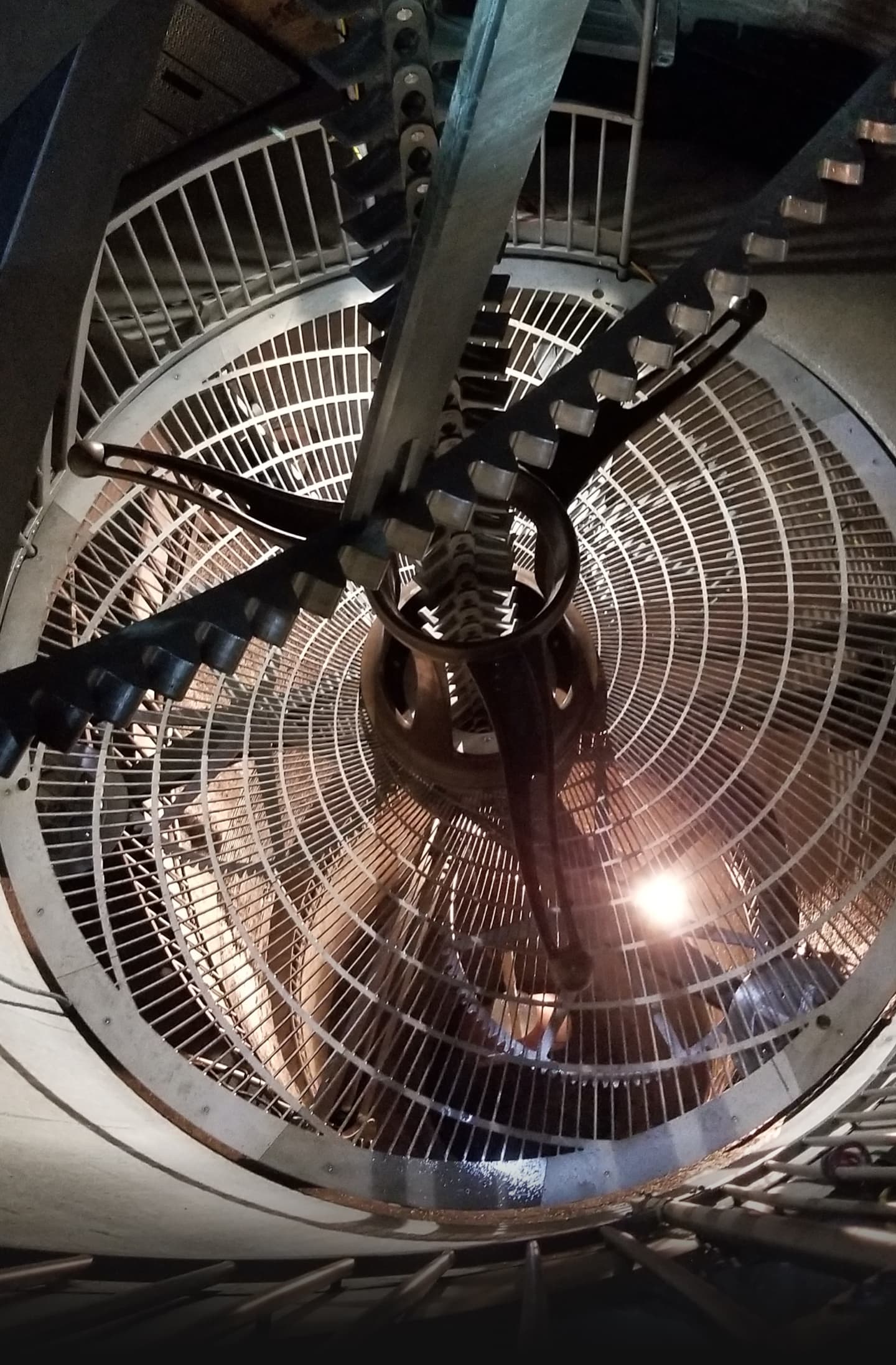
The winding platform and machinery that visitors engage to advance the Clock and activate its experience.
A skyshaft and a sunbeam
At the top of the shaft, a windowed cupola admits a beam of sunlight into the mountain — a simple, elegant reference that helps anchor the Clock to astronomical reality over vast time. That thin sunbeam is doing quiet work: connecting our mechanical ambitions to the rhythms of the planet itself.
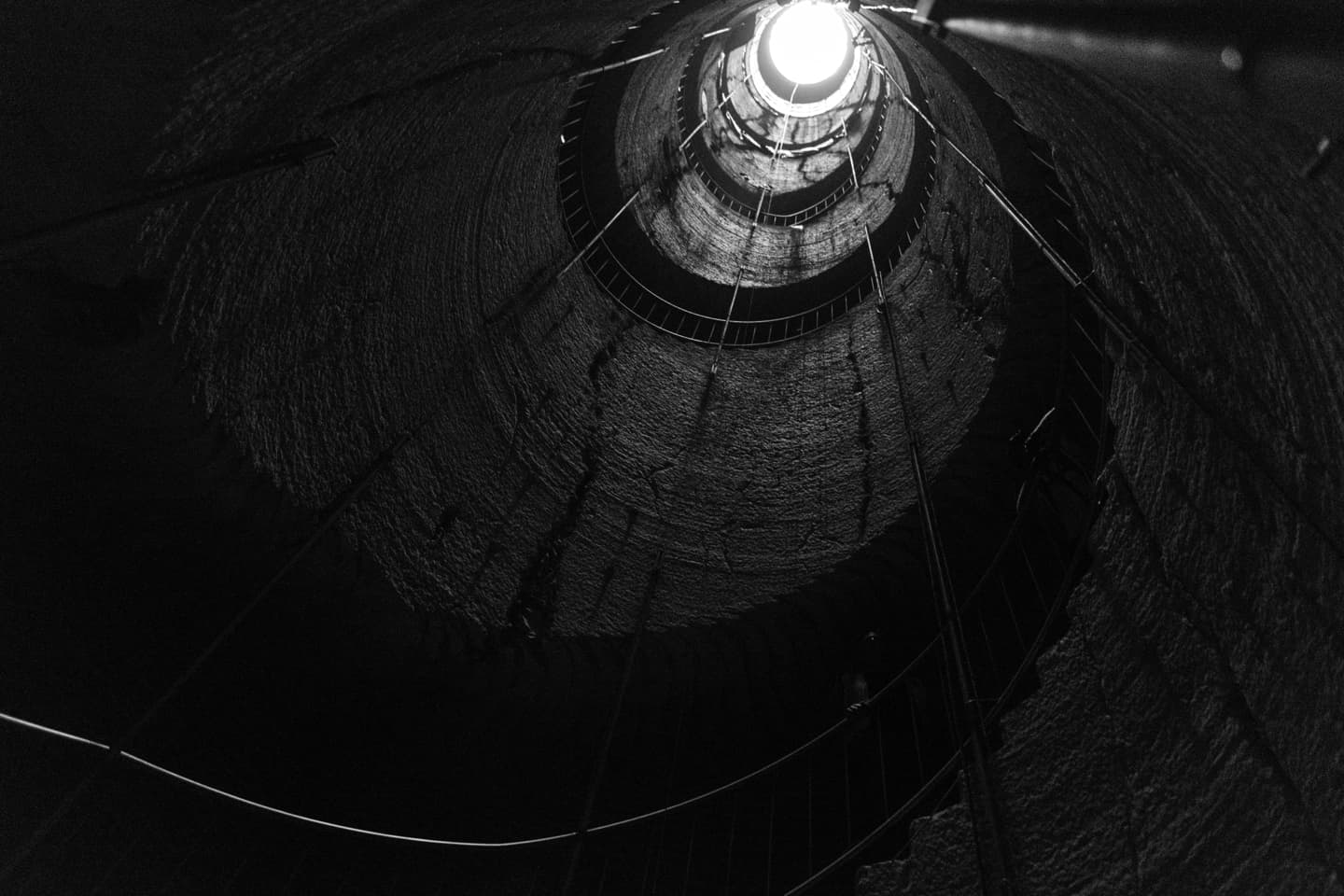
Looking up the shaft toward the light source at the summit.
Watch: The 10,000-Year Clock
Follow the build
The Clock is a living project, with progress, milestones, and new details emerging as the build continues. The Long Now Foundation posts ongoing updates here:
https://longnow.org/clock/#updates