How to Adjust the Gong on Your Cuckoo Clock
If your cuckoo clock doesn’t sound quite like the examples featured in our YouTube videos , the first thing to check is the position of the gong.
Traditionally, just before the cuckoo call, a small mechanical hammer strikes a spiral gong. This deep, resonant tone adds richness and character to the cuckoo’s voice. If the hammer is missing the gong, resting against it, or positioned too close, the result can be a dull, weak, or “sick” sounding strike.
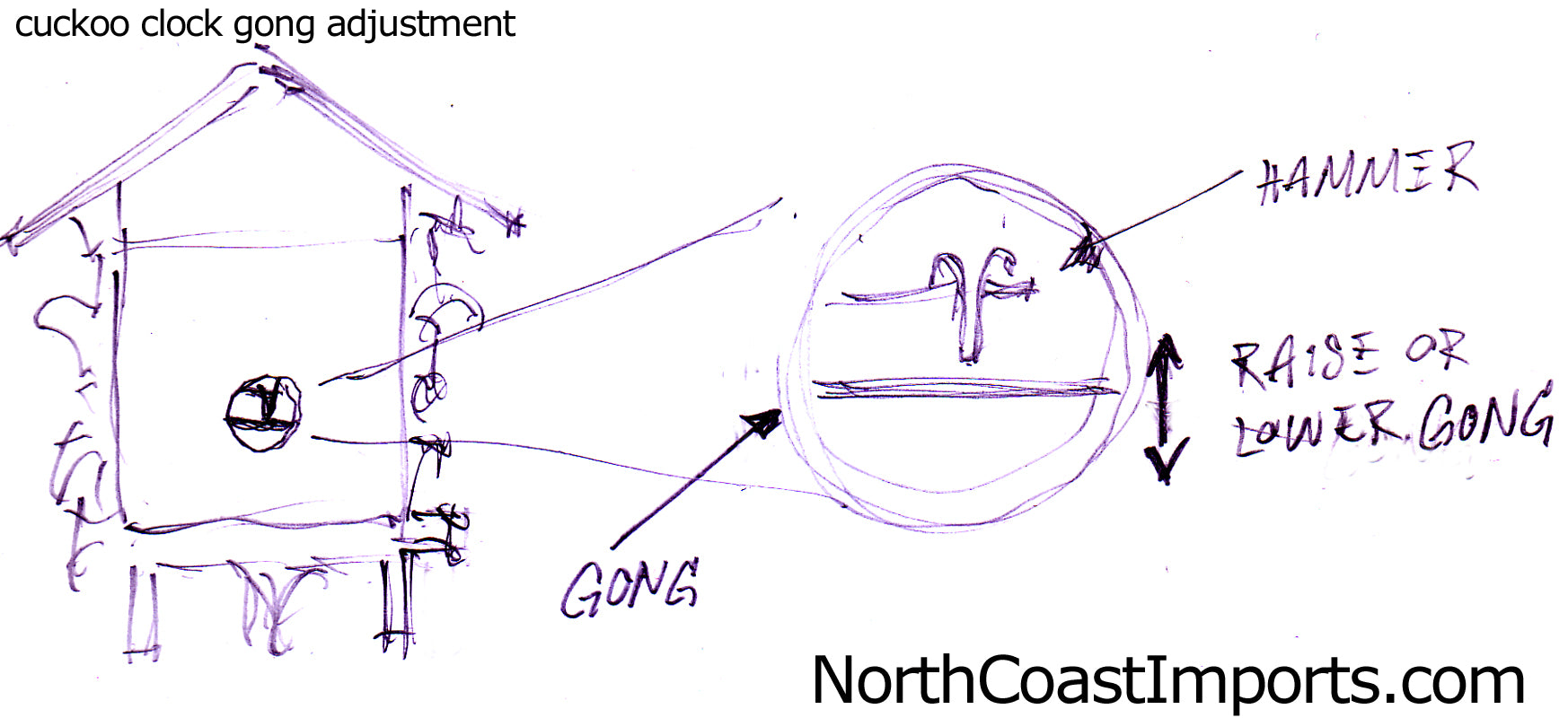
In the image above, you can see the back of a cuckoo clock. Through the small opening in the rear panel, the spiral gong and strike hammer are visible as black wires. From the inside, the spiral shape of the gong becomes more apparent:
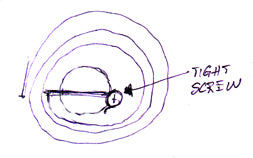
Step 1: Remove All Packing Materials
Before making any adjustments, confirm that all packaging material has been removed from around the spiral gong. During shipping, paper is often placed inside to protect delicate parts. Leaving this material in place will muffle the sound significantly.
After removing the packaging, carefully replace the back panel. For additional guidance, refer to our setup videos for proper unpacking and reassembly instructions.
Step 2: Check Hammer Position
With the back panel secured, observe the hammer and gong. When the hammer is at rest, it should sit just a few millimeters away from the gong — close enough to strike cleanly, but not touching.
If the hammer is:
- Resting against the gong
- Too far away to strike properly
- Trapped behind or below the gong
— the tone will not be clear or resonant.
Step 3: Make a Fine Adjustment
You can correct the issue by gently adjusting the spiral gong wire up or down. Move it very slightly — small adjustments make a big difference. The goal is to allow the hammer to strike the gong cleanly and rebound freely.