Hidden Horological Treasures in Baltimore
A few days ago, my Twitter followers may have been slightly mystified by my tweets about discovering hidden treasures in Baltimore.
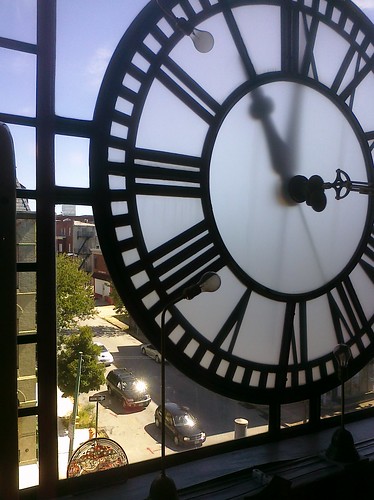
I recently had the inestimable pleasure of visiting a remarkable private collection of clocks, mechanical musical instruments, antique fans, lamps, and other rare mechanical wonders. It was one of those places that feels less like a home and more like a living museum — or perhaps an engine room for time itself.
Tower Clocks Inside and Out
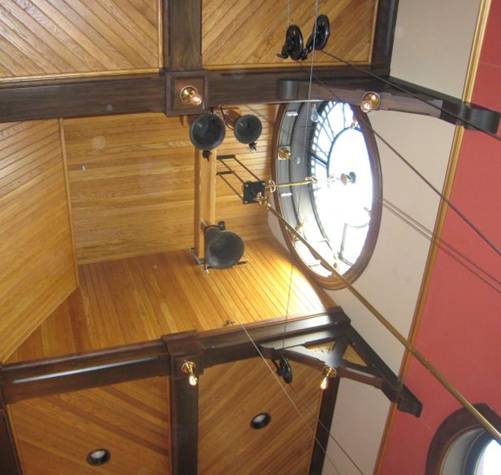
The tower clock collection was particularly impressive. The exterior of the house is fitted with several large tower clock dials — fixtures I must have passed for years without ever looking up to notice. Outside, even a dragon strikes a bell with its tail.
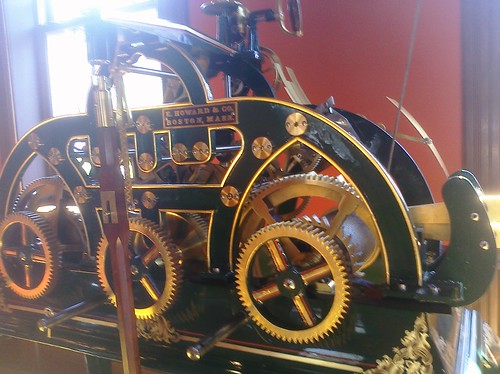
Inside, massive tower clock movements dominate entire rooms. In some cases, slots were cut through the floor so the pendulums could swing freely into the space below — a dramatic and beautiful solution. The house seemed to tick and breathe as one unified mechanism.
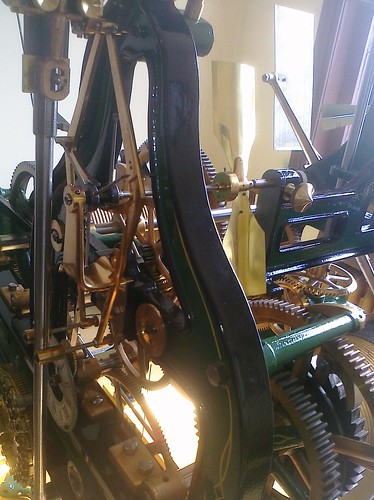
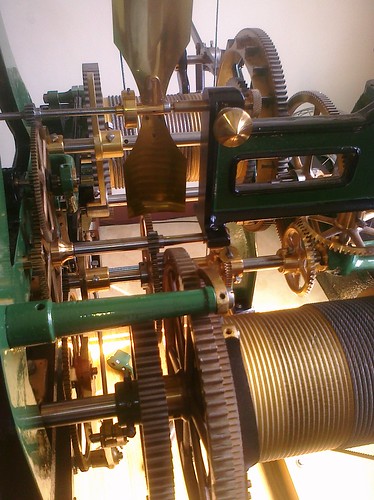
Several of the tower clocks featured three-legged gravity escapements , a robust and elegant solution for regulating large public clocks. The steady beat echoed throughout the house — as though the collector were living inside a great mechanical organism.
Orchestrion Hall
And that was only the beginning. The collection includes Winterhalter & Hoffmeier tubular chimes, master regulator clocks, Egyptian Revival pieces, and much more.
The building is not called “Orchestrion Hall” for nothing. The collector is a worldwide authority on mechanical organ restoration, particularly the extraordinarily rare and magnificent Welte orchestrions.
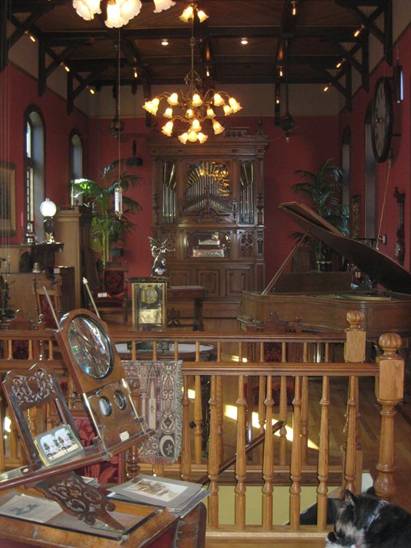
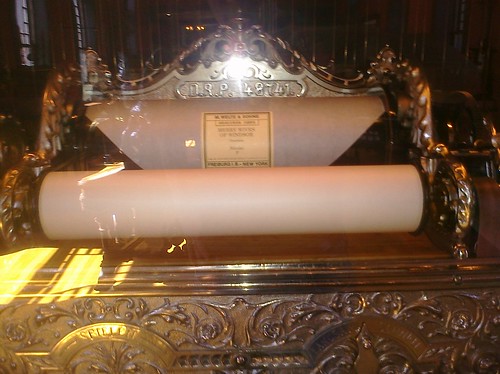
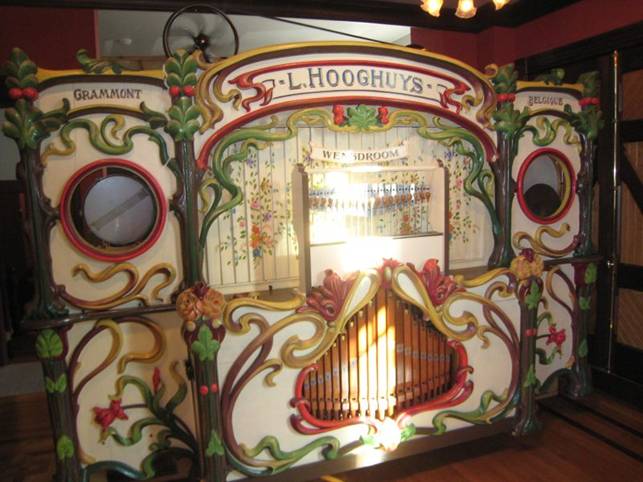
There are numerous additional mechanical musical instruments as well — including a powerful and exuberant band organ that can fill the space with sound.
A Workshop from Another Era
In the basement workshop below, the collector still uses turn-of-the-century belt-driven machinery. When I jokingly asked where the steam engine was, he pointed instead to an early electric motor — and, around the corner, an enormous single-cylinder diesel engine. The space felt suspended between centuries.
Fans and Fascinations
The collection extends beyond clocks and organs. There are rare antique fans — some engineered with ingenious early electrical controls.
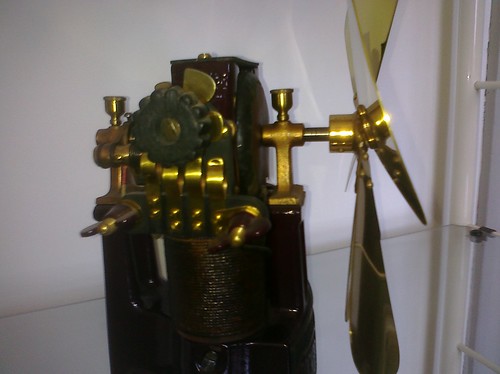
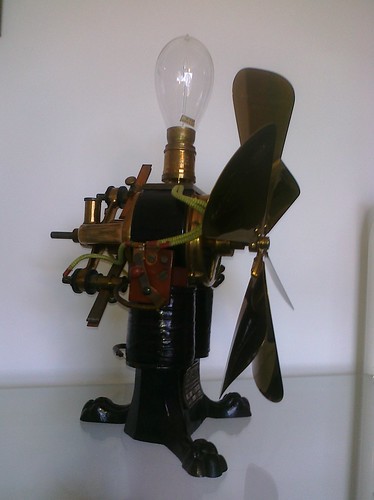
One fan even uses a light bulb purely as an impedance device to slow the motor — a clever and elegant piece of early electrical engineering.
I only wish I had taken more photographs. The entire place was a treasure trove of mechanical history — a reminder that the industrial age did not merely produce machines, but artistry.
Many thanks to Arcadian Clock for several of the images shown above.